
 Image 1 of 2
 Image 2 of 2
Save Lives with Practiced Skills
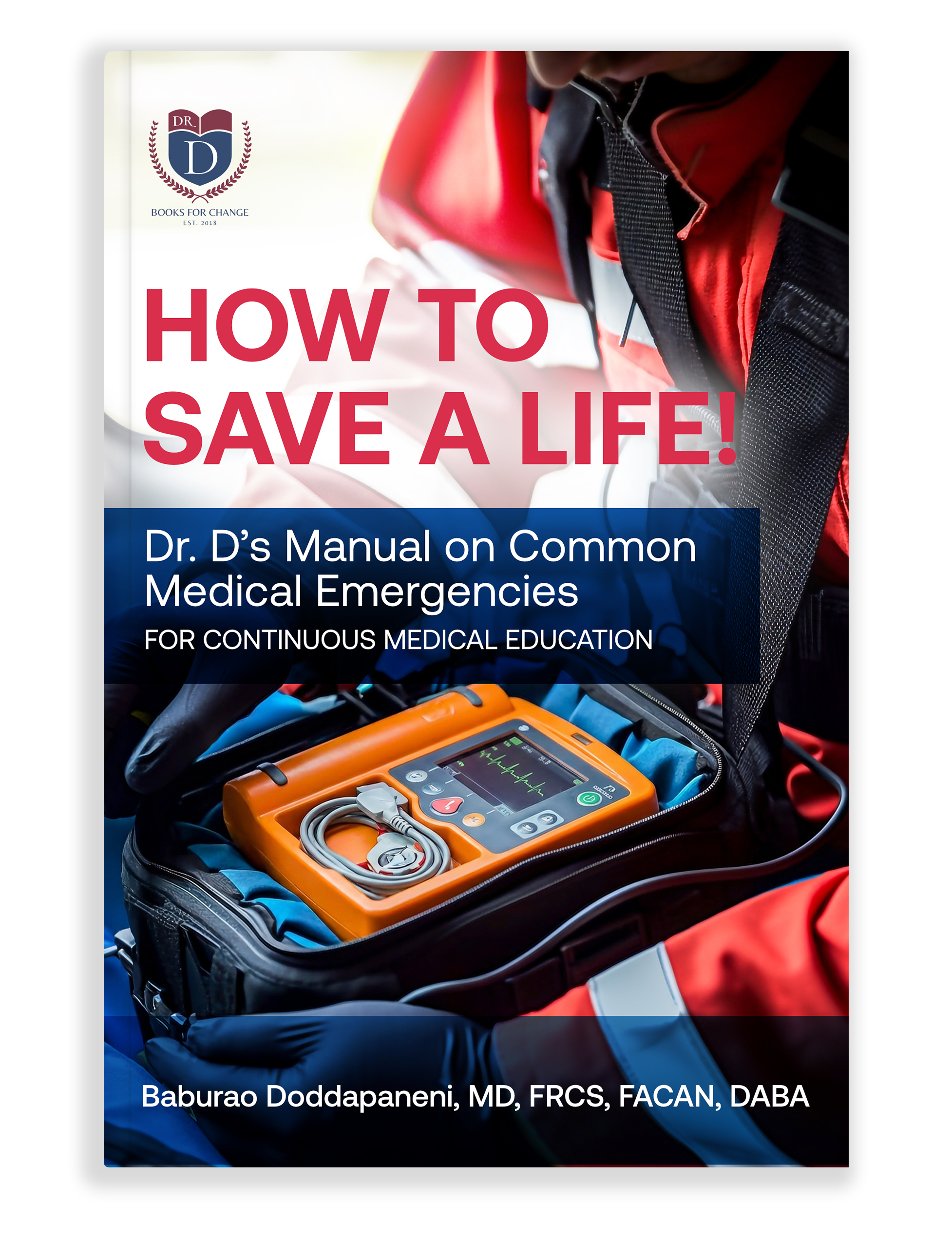
From acclaimed anesthesiologist, pain specialist, and medical educator Dr. Baburao Doddapaneni, How to Save a Life! is a practical, essential guide for clinicians seeking clarity in emergency response, rapid diagnosis, and lifesaving decision-making. This book is written for physicians, residents, physician assistants, nurse practitioners, emergency personnel, and senior medical students who need a reliable, step-by-step approach to acute medical care.
Drawing from decades of real-world experience across hospital systems, critical care, and frontline medicine, Dr. D distills complex emergency protocols into accessible, evidence-based practices that any clinician can apply immediately.
Discover how to:
Identify and manage life-threatening conditions with speed and precision
Perform rapid, structured evaluations that prevent diagnostic error
Stabilize patients in cardiac, respiratory, neurological, and trauma-related emergencies
Apply clear, concise algorithms that guide treatment in high-pressure environments
Communicate effectively with teams and families during crisis moments
Whether you’re responding to a cardiac arrest, a severe allergic reaction, a trauma event, or a rapidly deteriorating patient, this book equips you with the knowledge and confidence to act decisively.
Save Lives with Practiced Skills
From acclaimed anesthesiologist, pain specialist, and medical educator Dr. Baburao Doddapaneni, How to Save a Life! is a practical, essential guide for clinicians seeking clarity in emergency response, rapid diagnosis, and lifesaving decision-making. This book is written for physicians, residents, physician assistants, nurse practitioners, emergency personnel, and senior medical students who need a reliable, step-by-step approach to acute medical care.
Drawing from decades of real-world experience across hospital systems, critical care, and frontline medicine, Dr. D distills complex emergency protocols into accessible, evidence-based practices that any clinician can apply immediately.
Discover how to:
Identify and manage life-threatening conditions with speed and precision
Perform rapid, structured evaluations that prevent diagnostic error
Stabilize patients in cardiac, respiratory, neurological, and trauma-related emergencies
Apply clear, concise algorithms that guide treatment in high-pressure environments
Communicate effectively with teams and families during crisis moments
Whether you’re responding to a cardiac arrest, a severe allergic reaction, a trauma event, or a rapidly deteriorating patient, this book equips you with the knowledge and confidence to act decisively.